Showing posts with label Judaism. Show all posts

Monday, 2 January 2023

Some Jewish Thoughts for the Secular New Year


I hate the word resolution. Resolutions, by their nature, involve us in remediating a personal shortcoming. When we inevitably break those promises to ourselves, it is very difficult to go back. It is why so many resolutions are broken by the second week of January. We tend to see resolutions as a straight line. I resolve to lose 20 pounds this year.  When we inevitably fail, we have to start at the beginning. 

Judaism teaches us about teshuvah. Teshuvah means to return. We are invited into the process of redressing a deficiency. We reflect, we learn, we desire change, and we do the work necessary to hit the mark. If we miss it the first time, we can circle back and find it again.

With that in mind, here are some very Jewish things I'd like to do better for the secular New Year. Some are silly, and some are less so. 

1. Return to a synagogue in person. Three years is a long time to be withdrawn from a Kehillah Kedosha with only a virtual presence. It's time.

2. Eat some latkes when it isn't Chanukah. Fried foods and carbs be damned.

3. Make more challah.

4. Host a Shabbat dinner for friends.

5. Care more about the trees. (The 800 or so that Premier DoFo wants to remove at Ontario Place for a ridiculous spa is a good start.)

6. Be more consciously aware of my neighbours and neighbourhood. 

7. Participate in small acts of Tikkun Olam, the restoration of the world, either with my presence or my donations.

8. Be kinder. Kindness costs nothing and means everything.

9. Bubby the hell out of my granddaughters.

10. Find and enable my patience gene.

11. Attend the GUCI camp reunion in August. Camp friends are forever friends.

Happy 2023. Find your joy and make it work for you.


Wednesday, 15 August 2018

Stones in the Road (With Apologies to Mary Chapin Carpenter)

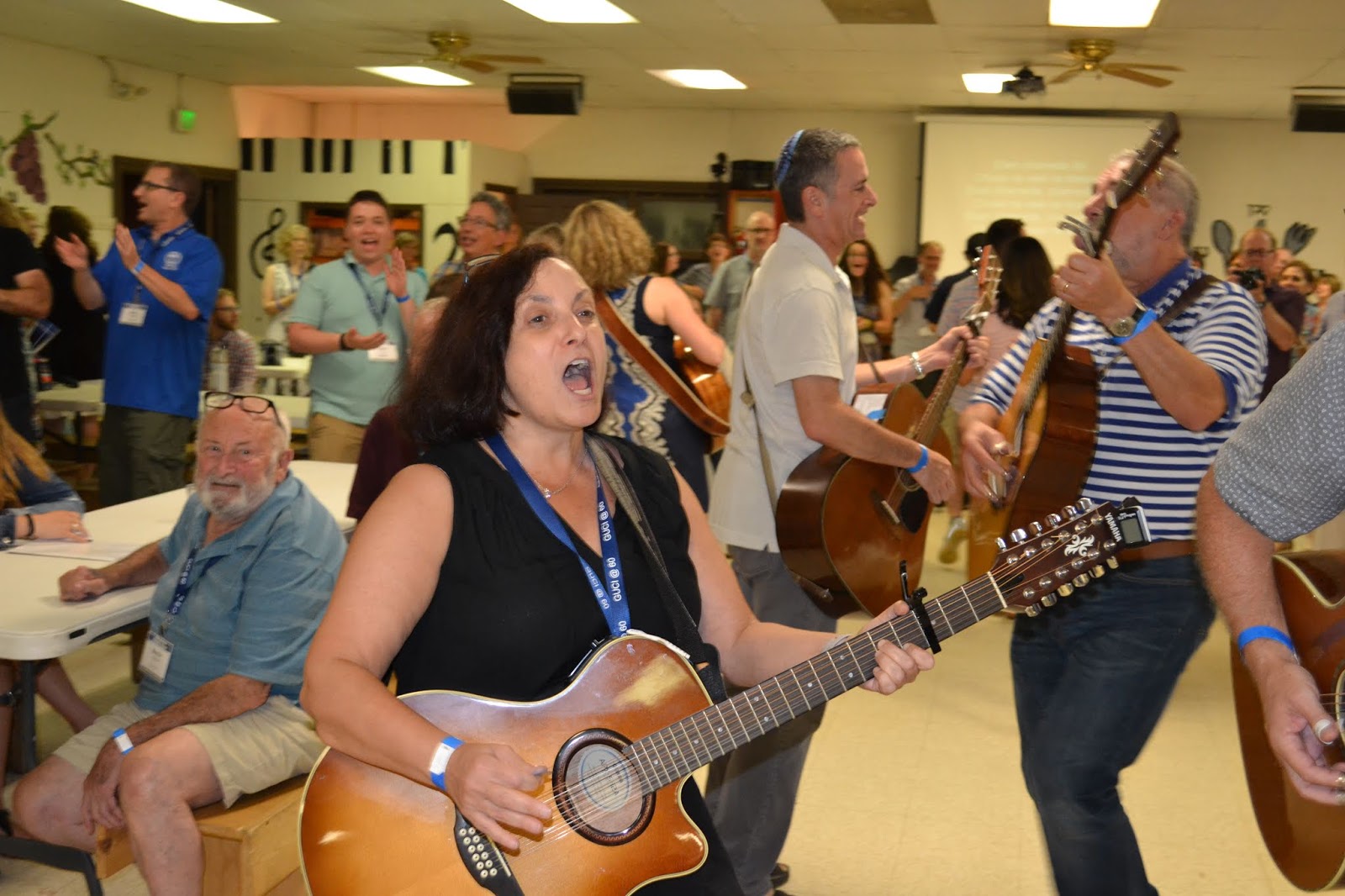
Last Shabbat morning, I had an opportunity to walk a familiar path at GUCI. It is a stroll I have taken hundreds if not thousands of times over the years. I shlepped my guitar along that well-worn gravel road that leads from the Chadar Ochel to the Beit T'fillah in order to prepare for services. But, what made this particular saunter unique is that it was the only time during the reunion weekend that I found myself completely alone.

It was a moment I used for some reflection. I wanted to take in the experience; to feel the stones in the road beneath my sandals, to smell the acrid August morning air. You see, when one reaches a certain point in life, the importance of such memories takes on a sense of deep and compelling urgency. I didn't want to forget anything about this place. This was the place of my youth. This was the place of my faith. This was the place of my deepest and oldest friendships. This was the place of decency. This was the place of true love.

As I trudged down that road, I could clearly recall the faces of hundreds, no...thousands, of campers and staff that had shared this sacred space with me in decades past. They were the pictures of tanned youth and sinewed strength. They had dreams and plans and hopes and ambitions. We were just coming into our own and the world would be stunned by our radiance. We rebounded from our disappointments far more gracefully and we hid our cynicism far more easily. We were idealistic and foolish in a way that only youth can forgive. Time was our ally and we had no thoughts of its fleeting.

I became acutely aware of the memories that each of the four-hundred of us has; those of us who made the pilgrimage back to this blessed, steamy cow-patch in weirdly but aptly Jewishly named, Zionsville. Each of us sharing those memories with others until the incomplete individual became the collective whole. A patchwork quilt of recollections woven together by laughter and prayer. It brought the holiness of this place into better focus for me.

As I came into the Beit T'fillah, I heard the din of conversations. People simply could not stop talking and sharing. I tuned my guitar and started to play the music of Shabbat morning with song leaders of my son's generation. We had only met the night before and had no idea if or how we might fit together but the sanctity of the space elevated our voices in perfect harmony. We all inherently understood how to do this because this is where we were tutored.


There is so much emotion wrapped up in a trip of forty-eight hours. It wasn't nearly long enough and yet it was perfection. I rediscovered a purity in my Judaism that had been sorely lacking lately. I heard The Divine Spirit whisper to me in the strings of a plucked banjo and I tasted Her kiss in the treacly Shabbos kugel. I sang until my lungs burned and I played until my fingers bled. I was more engaged in my faith during those two days than I have been in the past two years. This is the magic of Goldman Union Camp and it is a magic that every single one of the four hundred inherently understands. We are all just stones in the road of this place and for one weekend, we all came home.


Sunday, 8 November 2015

Audacious Hospitality

In Parashat Vayeira (Genesis 18:1-8), we are regaled with the story of Abraham and the wanderers. 
And God appeared to him by the oaks of Mamre as he was sitting at the entrance of the tent at about the hottest time of the day. Looking up, he saw: lo--three men standing opposite him! Seeing [them,] he ran from the entrance of the tent to meet them, bowing down to the ground, he said, "My lords, if I have found favour in your sight, please do not pass your servant by. Let a little water be brought; there was your feet and recline under a tree, and let me bring a bit of bread and you can restore yourselves.  Then you can go on--now that you have come across your servant." And they responded: Very well, do as you propose.
Abraham hurried toward the tent, to Sarah, and said, "Hurry, knead three measures of wheat-flour and bake some cakes!" Abraham then ran to the herd and took a young calf tender and sound, and gave it to the servant lad, who quickly prepared it. He took sour milk and [sweet] milk and the calf he had prepared and set it all before them; and as he stood over them under the tree, they ate.
What we often forget about this story is that not only is Abraham the consummate host, but he is actually quite ill at the time. He is sitting quietly at the beginning of the story because he is recovering from just having circumcised himself as a tangible sign of his covenant with The Almighty. Abraham's genuine show of hospitality and generosity is even more impressive given his advanced age and physical condition. For Abraham, welcoming the stranger was easy because it was a wholly natural impulse.

As I write this, 5000 of my fellow Reform Jews are gathered together in Orlando for the Union for Reform Judaism Biennial. It is a time when our movement takes stock of its congregational health, its members spiritual needs, its social justice responses, its continued learning and growing, and frankly it's just a damn good time. The music is phenomenal, the prayer experiences like no other, the study sessions are creative as hell, and Shabbat uplifts both body and spirit. I am sorry to be missing it this year, but one can't have it all, so I am following from afar.

One of the themes of the movement over the past couple of years is something that a smart  marketing guy has termed Audacious Hospitality. Personally, I find catchphrases anathema. They simply don't mean anything unless they have something substantive to back them up. The idea behind Audacious Hospitality is to correctly suggest that our congregations and our communities have been less than adequate at welcoming the new, the challenged, the different, the unique. We have also been less than stellar at engaging those who have remained. But we Jews are always striving to be B'zelem Elohim, in God's image, so I am willing to cautiously join the bandwagon. The Union made an auspicious declaration in the name of Audacious Hospitality, when it became the first major branch of any religion to comprehensively, unconditionally, and unanimously open its doors to transgender individuals. The resolution is extensive and sweeping.


THEREFORE, BE IT RESOLVED THAT the Union for Reform Judaism:
  1. Affirms its commitment to the full equality, inclusion and acceptance of people of all gender identities and gender expressions;
  2. Affirms the right of transgender and gender non-conforming individuals to be referred to by their name, gender, and pronoun of preference in our congregations, camps, schools, and other Reform affiliated organizations;
  3. Encourages Reform congregations, congregants, clergy, camps, institutions and affiliates, including NFTY, to continue to advocate for the rights of people of all gender identities and gender expressions;
  4. Urges the adoption and implementation of legislation and policies that prevent discrimination based on gender identity and expression, and that require individuals to be treated equally under the law as the gender by which they identify. This includes establishing the right to change without undue burden their identification documents to reflect their gender and name and ensuring equal access to medical and social services;
  5. Calls on the U.S. and Canadian governments at all levels to review and revise all laws and policies to ensure full equality and protections for people of all gender identities and expressions;
  6. Urges Reform Movement institutions to begin or continue to work with local and national Jewish transgender, lesbian, gay and bisexual organizations to create inclusive and welcoming communities for people of all gender identities and expressions and to spread awareness and increase knowledge of issues related to gender identity and expression. These activities may include cultural competency trainings for religious school staff, the new congregational resource guide on transgender inclusion being created by the Religious Action Center, education programs on gender identity and expression, and sermons on the topic of gender identity and gender expression;
  7. Recommends URJ congregations and Reform Movement institutions, facilities and events ensure, to the extent feasible, the availability of gender-neutral restrooms and other physical site needs that ensure dignity and safety for transgender and gender non-conforming individuals;
  8. Urges Reform Movement institutions to review their use of language in prayers, forms and policies in an effort to ensure people of all gender identities and gender expressions are welcomed, included, accepted and respected. This includes developing statements of inclusion and/or non-discrimination policies pertaining to gender identity and gender expression, the use when feasible of gender-neutral language, and offering more than two gender options or eliminating the need to select a gender on forms; and
  9. Will work in collaboration with other Reform Movement institutions to create ritual, programmatic and educational materials that will empower such institutions to be more inclusive and welcoming of people of all gender identities and expressions.
I couldn't be more proud of my movement or of my Union. This follows naturally on the heels of the ordination of gay and transgender clergy, the decades long support of same-sex marriage, and the lowering of barriers to those who face physical or emotional challenges. We have come together as Jews and vociferously proclaimed "All are welcome."

But we cannot truly walk in Abraham's shoes until we are willing to bring that lesson home to our congregations. We can't just say we are welcoming. We must live it. It isn't enough to just say "Hi" to the newcomer. We must go the extra step. Here are some easy starter suggestions that lay leaders and average congregants might want to try in order to extend that hospitality.
  • Make phone calls. Emails get tossed. Mail gets lost. But phone calls stick. Call just to chat, to impart information, and to glean concerns. "Hey, I saw you dropping off your kids at Hebrew school and I realized that we are on the same schedule. Want to grab a coffee next week?" 
  • Arrange play dates for the kids. Kids involvement can often translate into parents involvement.
  • Send New Year, Chanukah, and Passover greetings. Digital is fine, but snail mail is better. People love the personal touch.
  • Remember the child-free and the empty-nesters. Not everybody who joins a religious institution does so with kids. Highlight adult education and adult social experiences as priorities.
  • Feed them. Often. And with gusto. At every meeting and at every event. Nothing says welcome like food. Invite people for Shabbat lunches or take them by the hand and walk them into the Kiddush. Food is the great Jewish equalizer.
  • Visit the hospital beds of the sick and the shiva houses of the mourners, even if you only have a passing acquaintance. It matters and it is remembered.
  • Keep your website and social media sites relevant, up to date, and interactive. They are your gateways to communications with members. Members stop coming when communication is an afterthought.
The thing about Audacious Hospitality is that it falls flat when it feels forced or false. It succeeds when we, like Abraham, behave as if it were the norm rather than the exception. We have to learn to make welcoming the stranger an everyday part of synagogue and communal lives. Our Union has made incredible steps dealing with the large issues. We must now do the work on the ground. We are charged with the care of the individual. Until we follow Abraham's example, Audacious Hospitality is just a catchphrase.

Wednesday, 2 September 2015

Can I Be a Fully Religious Jew Without Communal Prayer?

I am temporarily interrupting this month of Elul blogs to engage in what I hope will be an honest and frank discussion.

My mother and I had a conversation last week that was, at its core, about the annual observance of the Yamim  Noraim (High Holy Days)-family dinners, service times, clothing options. But it truly evolved into a discourse about the changing nature of our congregations, the content found within those walls, and whether or not a questioning but highly rational, scientifically-based individual can find value in prayer, or more specifically communal prayer. And are we, (I count myself amongst those who are questioning) best served by sitting for hours in a synagogue, simply flipping pages, during this holiest of times?

A few caveats before I delve further.

1. I am a retired cantorial soloist whose job it was for over thirty years to facilitate these services and communal prayer experiences. High Holy Days were the most stressful time of the year simply because we knew that our "audience" was at peak attendance and it was our opportunity to engage those wayward souls who honestly and accurately describe themselves as "twice a year Jews." I am not at all naive about what brings people into synagogues and what keeps them away. 

2. God does play a part in my life, but as I get older I have found myself engaged in a much more rational, intimate, and personal conversation with the Divine Presence and a far less spiritual one. 

3. I am not a liturgically-uneducated person. I have spent years studying and understanding our services, the Hebrew and English texts, the order of our worship, and why we do what we do when we do it. 

4. Judaism is a religion that is dependant upon communal involvement for the completion of many mitzvot. A minyan, or quorum of 10, is required for public prayer and finds its roots in both Torah and Talmud.

"And I shall be sanctified in the midst of the children of Israel" (Lev 22:32)
"Separate yourselves from the midst of the congregation" (Numbers 16:21)

Additionally we find in the story of the ten spies who returned with negative reports about the land, Moses complains to Aaron:

"How long shall I bear with this evil congregation which murmur against me?" (Numbers 14:27)

Using a biblical exegesis known as gezerah shavah, whereby two or more verses with similar terminology are compared, the Talmud (Megillah 23b) has deduced that the minyan is required for communal prayer. So, if a minyan is a religious commitment, and I wish to be a religious Jew, how can I fully justify a decision to disengage from public prayer, (attending services) that no longer carries any emotional weight or spiritual meaning?

And so begins our discussion....

Herein lies my fundamental problem: I am having trouble finding purpose or spiritual fulfillment in the majority of service experiences of late, and that includes many of the ones that I have led. I have been fortunate to hear wonderful compliments from congregants over the years as to how my music has moved them to a higher plane and aided in their spiritual journeys, but my own personal divine pilgrimage has been frustratingly stunted when it is within the confines of the synagogue walls and prayer books. I have worked with and been involved with some tremendously creative rabbis and cantors over the years who have been on the cutting edge of synagogue worship experiences, so I am not stuck in any kind of worship rut. I have tried the experimental, the experiential, the natural, the playing it straight, and the study. At best I find myself fidgeting, at worst I am bored and disinterested. It used to be that I would let the music carry me away, but lately I simply cannot get engaged in a service. I love the music of our people and am most moved when it is eclectic, but I am finding my voice is often silent these days during traditional worship experiences.

Last year, on the second day of Rosh Hashana, The Husband and I took a hike and communed with nature rather than attend services. We did tashlich, blew the shofar, ate some apples and honey, and enjoyed the warm autumn morning. It was the closest to God I had felt in many years and hopefully we will get a chance to repeat the experience.

So, what is the answer?

Frankly I am stumped. Is removing myself from communal prayer the answer? I'm not convinced because as Jews we not only require brethren, we welcome them, we envelop ourselves in group worship so that we might attain a level of kadosh, holiness. So...I am opening the floor to suggestions and discussion.


Tuesday, 4 November 2014

There Are Things....

As we move through these early days of November and I find myself becoming far more introspective as I attempt to come up with meaningful posts to feed the beast that is NaBloPoMo, I am struck by just how much has changed since I last attempted this gruelling task of 30 in 30.

There are definite touchstones in our lives; those moments that we recall with a maelstrom of emotion. They forever change us and alter the trajectory of our daily existence. 

This year alone I have danced at four weddings, including that of Younger Son and his Beshert, celebrated with three friends as they welcomed grandchildren, helped friends move from their house into a long-coveted condo, retired from my job/calling of twenty years, and I continue to grieve the loss of my Other Mother whose absence is still an enormous chasm I can't fully breach.

Twelve months. So much to digest. A roller coaster of emotional upheaval that is truly vertigo-worthy.

Every Shabbat in my synagogue we read the following passage from the Siddur (prayerbook).

The Talmud teaches: 

Elu Devarim She-ayn La-hem Shiur...These are the things that are limitless,
of which a person enjoys the fruit of the world, while the principal remains in the world to come. (Pe-ah 1:1)

(The Hebrew is actually a bit more extensive, but the gist is in this opening passage.)

A second teaching from Talmud is then conflated with the first.

They are:
honouring one’s father and mother,
engaging in deeds of compassion,
arriving early for study, morning and evening,
dealing graciously with guests, 
visiting the sick, 
providing for the wedding couple,
accompanying the dead for burial,
being devoted in prayer,
and making peace among people.
But the study of Torah encompasses them all. (Shabbat 127a)

I have always liked these words, mostly because they speak to the philosophical daily norms to which we should devote ourselves, but I have often been left wondering if I ever truly made the effort to really live them. This year, I feel as though I did. (I can almost place little check marks beside them all.)

My personal journey through Judaism, and faith in general, has been sorely tested over this past year. Prayer, which had always come so easily in the past, is now stunted and muted. But these words from Talmud have reminded me of what is really important; to live in the moment, be kind, remember that we aren't alone in our journey, and that there is always a foundation to fall back on. 

Believe me when I say, it helps.


Friday, 3 October 2014

On This Day...

A Personal Thought for the Day

To Whomever:

This year I have no answers. I have no great morsels of self-awareness to offer.

I only have questions. 

Questions that hang in the air like limp helium-deprived balloons. Questions that have banal and vapid responses. 

I don't expect replies. I no longer rely on certainty. I can no longer utter the words as rote. The only truth I know is that nothing is as it once was.

I can only hope to help repair the brokenness. Mine. Others. I can only hope that we all can find comfort and peace in our togetherness, in the intertwining of each other's lives.

I am working on my cynicism, on my overly judgemental nature. I am trying to reforge a path that leads me in a comforting direction. I am searching for new meanings, new rituals. I remain consoled by music and nature. I remain comforted by love.

I am a work in progress. 

Monday, 26 May 2014

Music and the Spirit According to Plato

I have been trying to find a way to say this, but it seems that Plato said it for me and far more eloquently.


Expressions of spirituality are not my strong suit. Better to let the experts handle the tough stuff. (Thanks to Philosophy Wall for adding the guitar. It was just the right touch.)

More to come as the end draws nigh.

Thursday, 15 May 2014

Singing is Like Air

The Husband and I were just lazing around last night half-watching insipid television while waiting for Modern Family to air. In the midst of a lull, he dropped a bombshell of a question.

"Are you going to miss singing, honey?", he asked with tremendous sincerity.

What is interesting about the query, is that in all the time that I have been considering my retirement from the Cantorial Soloist position, I have never once thought of it as a cessation from singing. How could I even possibly imagine a world in which I don't sing?

I sing all the time. All the time!! I don't always realize that I am singing. I'm that person; the moron you've often seen stopped at a red light who is totally immersed in and belting out whatever is coming out of the radio. (More often than not it is Sirius XM channel 72 On Broadway, but it really doesn't make much of a difference. I have been known to wail everything and anything from Fleetwood Mac to Adele to Kenny Chesney to Pete Seeger.) If you've been anywhere near the Greater Toronto Area in the last fifty years, I'm sure you've seen me car-boogieing to Aretha and Tina, or air-guitaring a lick from Zeppelin or ZZ Top.

Yup. I'm that person.

I sing in the shower, when I'm drying my hair, when I'm on the treadmill, when I'm ironing clothes, and when I'm grocery shopping. I'm the dork who sings too loudly with her headphones on, and the idiot who has elicited odd looks from complete strangers on airplanes. (There was that time that I absent-mindedly crooned  Hasa Diga Eebowai from The Book of Mormon on a flight to Denver without a care in the world until the young mother sitting across the aisle with her small children gave me the death stare...but that's a whole other story.) I sing when I'm happy, sad, miserable, excited, bored, and every other possible emoticon sitting on your laptop.

I sing.

I sing so often that my children used to beg me to stop.

It's just so much a part of my psyche and my soul that when The Husband posed his question last evening it stunned me.

Now I fully realize that he was talking about my public singing, that persona I assume whenever I ascend the bimah or stand in front of a class or a dining hall filled with campers. But the way he phrased it was a bit of a jolt.

I have been actively involved in the world of Jewish music since I was thirteen years old. That is more than 3 1/2 decades of teaching religious school and preschool music classes; conducting junior and youth choirs; singing in dozens of choirs, choruses, and ensembles; NFTY, camp, and retreat songleading; soloing for several congregations; leading seminars, workshops, and day-sessions for the up and comers; community healing services, B'rit Milah, B'nai Mitzvah, weddings, funerals and unveilings. I was a Jewish music professional long before the internet made sharing so easy. I was the person who played those first NFTY albums (on vinyl!) over and over and over again so that I could accurately learn how Debbie played the chords to Sing Unto God. I still have some of those early Eurovision cassette tapes and those Israeli song contest recordings. I still remember the arrangement I taught one of my earliest youth choirs for Shir Baboker. 9 and 10 year olds sang the entire piece...every verse...in Hebrew. We rocked Zimriyah that year. I was the music teacher who composed her own Chanukah and Purim songs because there wasn't all that much out there at the time. I was the soloist on the bimah who came down into the congregation because I insisted on not being the only voice heard singing L'cha Dodi on Shabbat. This has been my professional world for almost 40 years.

Will I miss that? Of course. It is hard to walk away from a passion that has been all-encompassing, but as it says in Kohelet "There is a time for everything, and a season for every activity under the heavens."

The time is right. In my years in Jewish music, I have been privileged to be part of a revolution. We have taken our synagogues' prayers and liturgy and transformed them into living breathing experiences in which our congregants actively participate. We sing the music of Lewandowski alongside that of Debbie Friedman and Dan Nichols. We have welcomed all manner of instruments, styles, languages, voices, and we use them all to further our conversation with The Divine Spirit. I am proud of what I have accomplished in my career, but the time has come to do something else.

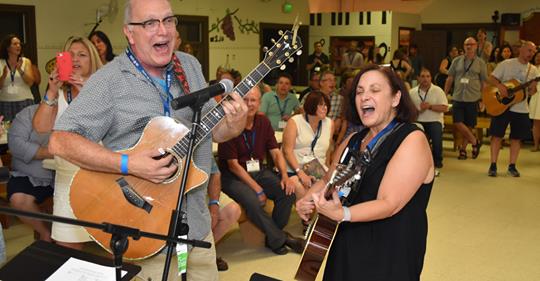
Will I miss singing? No, because I will never stop. Singing is like air to me. I could no more stop singing than I could breathing. You may not see me leading a Mi Sheberach from the front, but I would lay even money that you will hear my voice from somewhere in the congregation. I'll be the dork who is swaying back and forth with her eyes closed while miming the chords on an imaginary twelve-string.

I will have more to say about my upcoming retirement and my amazing congregation in the weeks to come.


Monday, 14 April 2014

The Ghosts of Pesachs Past

As we were setting up for tonight's seder at Sister/Cousin's home yesterday, The Little Bro and I found ourselves discussing seders past.

The sederim of my youth were anything but conventional. They were big, loud, brash, musical, and creative. (Actually...things haven't changed all that much.) We often used off-print haggadot (we still do), had several musical instruments at the table (we still do), and it wasn't unusual for a new experience or visitor to make an appearance.

My brother and I spent part of yesterday reminiscing about the time that our uncle decided to introduce kinetic energy to the seder table and how we kids couldn't help but foil his best-laid plans with our own brand of chicanery.  Or about the time that he read everybody's aura with a crystal. There was the year that he invited an odd "homeless-looking" (we never really did discovered his name or story) gentleman to join us. The chap ate like he hadn't in a month, but was so grateful and so polite that we all felt as though we had fulfilled the mitzvah of welcoming the stranger.

Then there was the time that I insisted that we place an orange on the seder plate and nearly set off WWIII. The political discussions that followed were forever banned from the seder table by my mother. There was the year after Other Father's dad passed away that we taught all of the kids how to sing Chad Gadya in Yiddish the way he always did as a surprise. We gathered them all around him and they just let it go. Other Father was so moved he could barely get through the first verse.

Our seders have grown so large that with next generations and significant others added in, we have had to find suitable locales to host us all. We have used condo party rooms and synagogue multi-purpose areas. We have developed seating charts and menu lists. We have measured space down to the last centimetre and we have detailed the event as carefully as any party planner. (A special shout-out for this stuff has to go out to my Little Bro's Yin to his Yang. She is unbelievable.) It isn't always easy and we don't all agree, (OY!!) but every year we seem to make it work.

I think that the reason that the two of us got a bit nostalgic yesterday and certainly a bit misty, was in part because of those who will not be with us this year. Some because it is the yearly trade off with other sides of family; some because of university exams; some unfortunately because of illness; and some because......

There is a great deal of complaining that goes with Pesach. It is so much work. It is so much cooking. It is so much cleaning. It is so much constipation. All of it true. But as my conversation with my brother reminded me yesterday, it is really all about the people. Those that are here and those that will always be here. They are all in my heart and soul this year and every year.

May your Pesach sederim be lovely, meaningful, fun, and filled with the stuff that makes memories.

Sunday, 3 November 2013

Women Of The Wall at 25

I am conflicted.

It isn't all that unusual.

When it comes to the state of Israel, conflicted is a kind expression of my emotions.

Don't get me wrong. I believe strongly in the existence of the state and in its unique position as a haven for Jewish life, thought, education, culture, prayer, and growth. Israel is and always should be.

But, I am also a realist and a progressive. As a Jewish woman and citizen of the Jewish diaspora, I feel it is imperative to challenge some of Israel's more disturbing and misogynistic policies. The fact of the matter is that there are still many ideas and regulations within the state that are anathema to me. It is amazing that for many, these abhorrent laws have crystallized around the Kotel (The Western Wall) and the fight for equal recognition of women's tefillah (prayer) by the advocacy group Women of the Wall.

For twenty-five years this dedicated group, encompassing religiously diverse women and many men who support them, have been gathering at the Wall every month to celebrate Rosh Chodesh, the new month. They come to the women's side of the mechitzah in order to pray their way; draped in tallitot (prayer shawls), covered in kippot, and ready to sing the prayers of Hallel. They read from the Torah and they celebrate as Miriam and the women did at the Sea. But, the orthodox rabbinate that controls the Wall and its plaza has become increasingly threatened by these women. They see them as an affront to all that they hold sacred, and have unleashed a torrent of hateful rhetoric upon them. These brave women have been catcalled. Epithets have been hurled in their direction while chairs, eggs and other projectiles thrown at them from the men's side. And when the abuse was at its very worst, they have been arrested, searched, relieved of their precious religious items, and held without charge. All because they wished to pray at Judaism's holiest site.

And through it all they have persisted. They have shown up every month, rain or shine, to daven. Lately, however their persistence has shown moderate signs of progress. The Knesset has been attempting to work out a compromise between WoW and the rabbis who oppose them. The battle is not yet over, but it does finally seem to be moving in a positive direction.

Today, as we prepare to welcome the new month of Kislev, the Women of the Wall are getting ready to celebrate their 25th anniversary. They will be commemorating this occasion in much the same way as they have every previous Rosh Chodesh over the past quarter of a century, with prayer and reverence at the Wall. I wish that I could be there to join them, but I hope that they take this meagre offering as a sign of my unwavering support and solidarity.

This prayer was written by Rabbi Sue Mauer Morningstar of Ashland Oregon.

To my dear Kotel sisters, on Rosh Chodesh Kislev, 5774,

Although I cannot be with you to celebrate our 25th anniversary, I send out this prayer and my love to you:

May the Holy One who blessed our ancestors Avraham and Sarah, Yitzchak and Rivkah, Yaakov and Leah, Rachael, Bilhah and Zilpah, bless all of the Nashot Hakotel and our supporters with strength, courage, perseverance and divine grace.  In the merit of our ancestors who sang out to God with their full beings in a strong voice, Miriam, Channah, Devorah, Serach bat Asher, the Shulamite and the women who came out to greet King David,  in the name of Michal, Bruriah and Rashi’s daughters,  in the memory of our Bubbies, many of whom were kept behind the mechitzah and out of cheders and yeshivot and colleges, and in humble recognition of our sisters in repressive religious regimes around the world today who are not free to sing out and to worship God in joy, may all women be free to worship God, each in her own way, because the time for silencing women is over!  “Shiru l’Adonai shir chadash!”, sing out to God a new song!

Amen, may it be so.


Wednesday, 4 September 2013

Blog Elul Day 29-Return

This is the final Blog Elul post for the year. Thank you to everyone who followed and commented. I appreciated all of the feedback. May we all learn the lessons of Elul well, and may the new year bring health, happiness, and peace to all. Shana Tova U'metukah.


"The Holy One, blessed be God, said to Israel: 'My children, present to me a single opening of repentance, small like the eye of a needle, and I will open for you entrances through which wagons and carriages can pass.'" –Shir Hashirim Rabbah 5:3


"There is nothing like returning to a place that remains unchanged to find the ways in which you yourself have altered."~Nelson Mandela

True repentance returns and renews our balance.

I Wish I Could Go Back to College (from Avenue Q) Music and Lyrics by Jeff Marx and Robert Lopez


**Blog Elul is the brainchild of Rabbi Phyllis Sommer. Her blog and various links can be found at http://imabima.blogspot.com

Tuesday, 3 September 2013

Blog Elul Day 28-Give

“Service to others is the rent you pay for your room here on earth.”~Muhammad Ali

"Anticipate charity by preventing poverty; assist the reduced fellow man, either by a considerable gift or a sum of money or by teaching him a trade or by putting him in the way of business so that he may earn an honest livelihood and not be forced to the dreadful alternative of holding out his hand for charity. This is the highest step and summit of charity's golden ladder."~Maimonides

Music and the Mirror (from A Chorus Line) Music by Marvin Hamlisch; Lyrics by Edward Kleban


**Blog Elul is the brainchild of Rabbi Phyllis Sommer. Her blog and various links can be found at http://imabima.blogspot.com

Monday, 2 September 2013

Blog Elul Day 27-Intend

"Our Jewish path to inner awareness begins with kavanah. Our meditative lives as Jews could not be complete without it, for it is the steering wheel of all inner consciousness work."~Rabbi Zalman Schacter Shalomi

Prayer without intention is hollow and devoid of meaning.

My New Philosophy (from You're a Good Man, Charlie Brown) Music and Lyrics by Andrew Lippa


**Blog Elul is the brainchild of Rabbi Phyllis Sommer. Her blog and various links can be found at http://imabima.blogspot.com


Sunday, 1 September 2013

Blog Elul Day 26-Hope


"Hope is that thing with feathers that perches in the soul and sings the tune without the words and never stops... at all."~Emily Dickinson

Love begins with hope.

Gold (from Once) Music and Lyrics by Fergus O'Farrell


**Blog Elul is the brainchild of Rabbi Phyllis Sommer. Her blog and various links can be found at http://imabima.blogspot.com

Saturday, 31 August 2013

Blog Elul Day 25-Begin

"All beginnings require that you unlock a new door."~Reb Nachman of Bratslav

“What we call the beginning is often the end. And to make an end is to make a beginning. The end is where we start from.”~T.S. Eliot

Circle of Life (from The Lion King) Music by Elton John; Lyrics by Tim Rice


**Blog Elul is the brainchild of Rabbi Phyllis Sommer. Her blog and various links can be found at http://imabima.blogspot.com

Friday, 30 August 2013

Blog Elul Day 24-End

"When I stand before God at the end of my life, I would hope that I would not have a single bit of talent left, and could say, 'I used everything you gave me'."~Erma Bombeck

A life well-lived is not necessarily an ending, but rather a blueprint for beginnings.

I'm Still Here (from Follies) Music and Lyrics by Stephen Sondheim


**Blog Elul is the brainchild of Rabbi Phyllis Sommer. Her blog and various links can be found at http://imabima.blogspot.com

Thursday, 29 August 2013

Blog Elul Day 23-Love

“Love is not blind - it sees more, not less. But because it sees more, it is willing to see less.”~Rabbi Julius Gordon

Seasons of Love (from Rent) Music and Lyrics by Jonathan Larson


**Blog Elul is the brainchild of Rabbi Phyllis Sommer. Her blog and various links can be found at http://imabima.blogspot.com


Wednesday, 28 August 2013

Blog Elul Day 22-Dare

 “A person will be called to account on Judgement Day for every permissible thing he might have enjoyed but did not.”~ Talmud

A person's life cannot be considered complete until she steps up and takes chances to do those things which takes her out of her comfort zones.

"Because of our routines we forget that life is an ongoing adventure."~Maya Angelou

Don't Rain on My Parade (from Funny Girl) Music by Jule Styne; Lyrics by Bob Merrill


**Blog Elul is the brainchild of Rabbi Phyllis Sommer. Her blog and various links can be found at http://imabima.blogspot.com

Tuesday, 27 August 2013

Blog Elul Day 21-Change

"You change the world when you change your mind."~Cyndi Lauper (from Kinky Boots)

The Sex is in the Heel (from Kinky Boots) Music and Lyrics by Cyndi Lauper


**Blog Elul is the brainchild of Rabbi Phyllis Sommer. Her blog and various links can be found at http://imabima.blogspot.com

Monday, 26 August 2013

Blog Elul Day 20-Judge

"But repentance, prayer, and charity temper judgement's severe decree." (from U'netaneh tokef liturgy; High Holidays)

Sit Down You're Rockin' the Boat (from Guys and Dolls) Music and Lyrics by Frank Loesser


**Blog Elul is the brainchild of Rabbi Phyllis Sommer. Her blog and various links can be found at http://imabima.blogspot.com